

Dr. Kate Ingham
Certified Veterinary Acupuncturist (CVA)Dr. Kate Ingham is a graduate of the Washington State University College of Veterinary Medicine. During her time there, she developed a passion for integrative medicine and fear-free care, earning her CVA license through the prestigious Chi Institute.
By combining acupuncture with a low-stress approach, Dr. Ingham works to reduce pain, promote natural healing, and restore balance for her patients—all while ensuring a calm, positive experience in the clinic.
Veterinary Acupuncture for Dogs & Cats
Acupuncture is a safe, gentle, and effective therapy that helps many pets feel better, move more comfortably, and enjoy a higher quality of life. At Animal Clinic and Hospital, our trained veterinarian uses acupuncture as part of a comprehensive, integrative approach to care—often alongside conventional medicine, surgery, or rehabilitation.
Whether your pet is dealing with chronic pain, recovering from injury or surgery, or managing a neurological or age-related condition, acupuncture may be a valuable addition to their treatment plan.
What Is Veterinary Acupuncture?
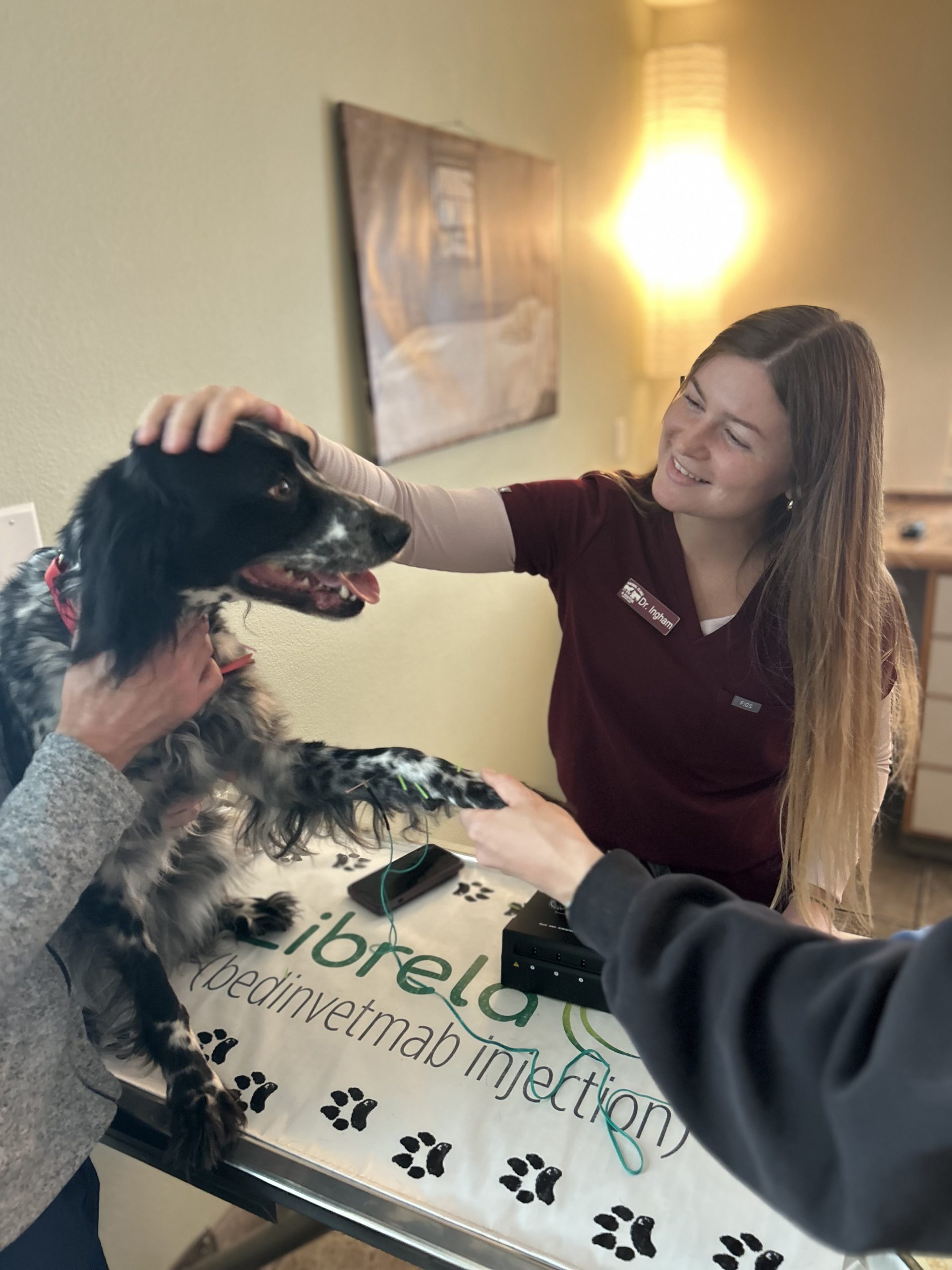
Veterinary acupuncture involves the placement of very fine, sterile needles at specific points on the body. These points correspond to areas rich in nerves, blood vessels, and connective tissue.
Stimulation of these points can:
- Trigger the release of the body’s natural pain-relieving substances (endorphins, opioids, serotonin)
- Improve local blood flow and reduce inflammation
- Modulate nerve signaling and muscle tension
- Support overall comfort and healing
Modern veterinary acupuncture is grounded in both traditional Chinese veterinary medicine principles and contemporary understanding of neurophysiology and pain pathways.
Conditions Commonly Helped by Acupuncture
Acupuncture is most often used for:
Pain & Musculoskeletal Conditions
- Arthritis and degenerative joint disease
- Hip dysplasia
- Muscle strains, tendon injuries, and soft tissue pain
- Post-surgical pain and recovery support
Neurological Conditions
- Intervertebral disc disease (IVDD)
- Spinal cord injuries or nerve damage
- Weakness or paralysis
- Certain cases of seizures (as supportive care)
Geriatric & Quality-of-Life Support
- Age-related mobility issues
- Reduced appetite or energy
- Cognitive changes
- Comfort care in chronic or advanced illness (including cancer support)
Other Supportive Uses
- Gastrointestinal issues (nausea, reduced appetite, some inflammatory conditions)
- Urinary incontinence (in select cases)
- Anxiety or stress-related behaviors (as part of a broader plan)
- Skin conditions such as lick granulomas (supportive)
Acupuncture works best as part of a multimodal plan and is not a standalone cure for every condition.
Benefits for Pets
Many pet owners notice:
- Reduced pain and improved comfort
- Better mobility and willingness to move or play
- Muscle relaxation
- Decreased anxiety or improved overall demeanor
- Support for appetite and digestion in some patients
- Fewer side effects compared with long-term medication alone
Because it is non-pharmaceutical, acupuncture can be especially helpful for pets who cannot tolerate certain medications or who need additional pain control.
What to Expect During a Session
- Initial visit: A thorough physical exam and discussion of your pet’s history, current medications, and goals.
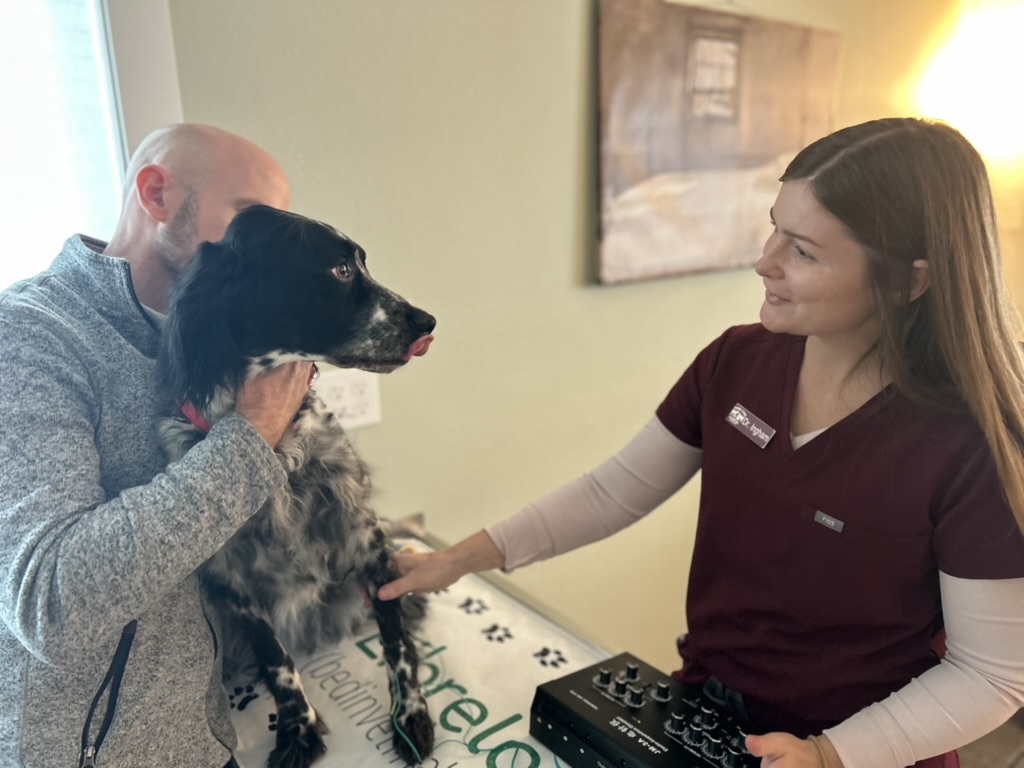
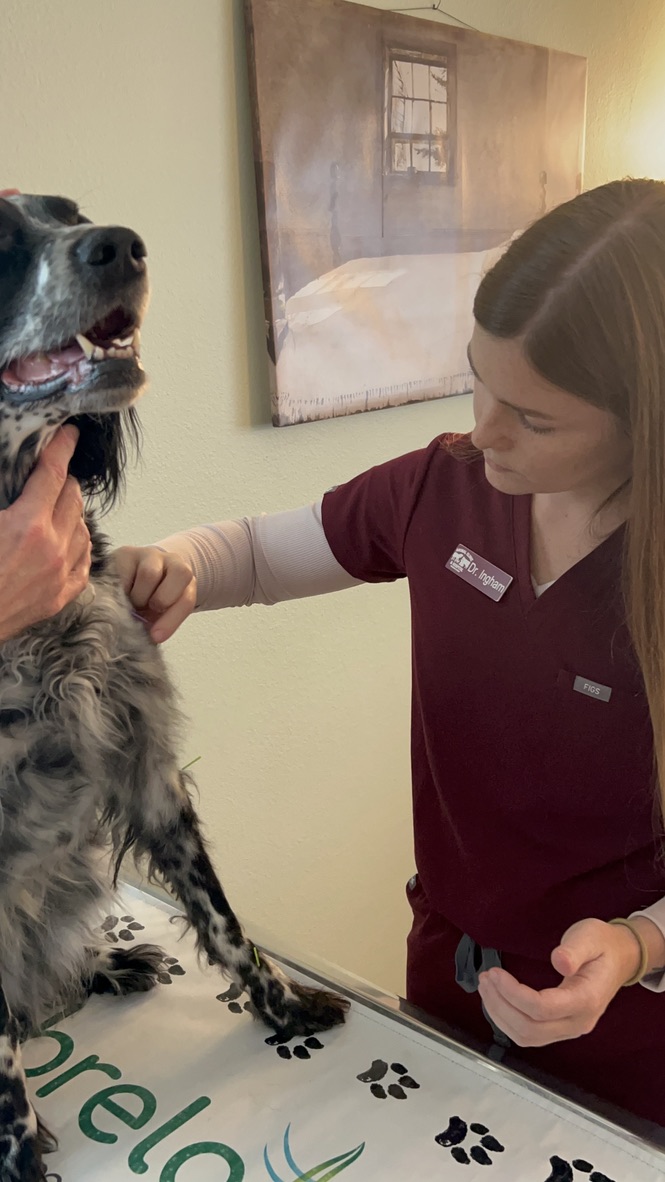
- Treatment: Fine sterile needles are gently placed. Most pets tolerate this well—many become relaxed or even fall asleep.
- Session length: Typically 20–30 minutes, depending on the patient and condition.
- Frequency: Acute problems may improve in a few sessions. Chronic conditions often require a series of treatments (commonly weekly at first, then spaced further apart for maintenance).
We prioritize your pet’s comfort at every step. Treats, gentle handling, and a calm environment are used whenever helpful.
Safety & Side Effects
When performed by a trained veterinarian, acupuncture is considered very safe for dogs and cats.
Common (usually mild and temporary) responses:
- Relaxation or mild sleepiness for a day or two
- Temporary mild soreness at needle sites
- Occasional slight increase in thirst or mild muscle twitching
Serious complications are rare when proper technique and sterile needles are used. Contraindications or special caution apply in certain situations (e.g., severe clotting disorders, open wounds/infections at needle sites, or extreme anxiety that prevents safe handling). Your veterinarian will evaluate whether acupuncture is appropriate for your individual pet.
Frequently Asked Questions
Is acupuncture painful for my pet?
Needle insertion is usually well tolerated. Most animals show little to no reaction, and many become noticeably relaxed.
How many treatments will my pet need?
It varies. Acute issues may respond in 3–5 sessions. Chronic conditions often need a course of treatment followed by periodic maintenance.
Can acupuncture be used with other treatments?
Yes. It is frequently combined with pain medications, physical rehabilitation, laser therapy, surgery, or other conventional care.
Who performs the acupuncture?
Only a licensed veterinarian with additional training and certification in veterinary acupuncture should perform the procedure.
Is there scientific support?
Acupuncture is recognized as a useful adjunct for pain management in dogs and cats by major veterinary organizations, including the American Animal Hospital Association (AAHA). Research continues to grow, particularly in pain control and certain neurological conditions.
Is Acupuncture right for you?
Call Now!
If your dog or cat is dealing with pain, mobility challenges, neurological issues, or the effects of aging, acupuncture may help improve their comfort and quality of life.
Contact us today to schedule a consultation or learn whether acupuncture could be a good fit for your pet. Our team is happy to discuss your pet’s specific needs and create a personalized care plan.
